Complete Guide to Buying a Used VTL
A vertical turning lathe (VTL) turns large, heavy, short-diameter parts that a horizontal lathe cannot hold. Here is what to check on the table, spindle and rails, and what it costs.
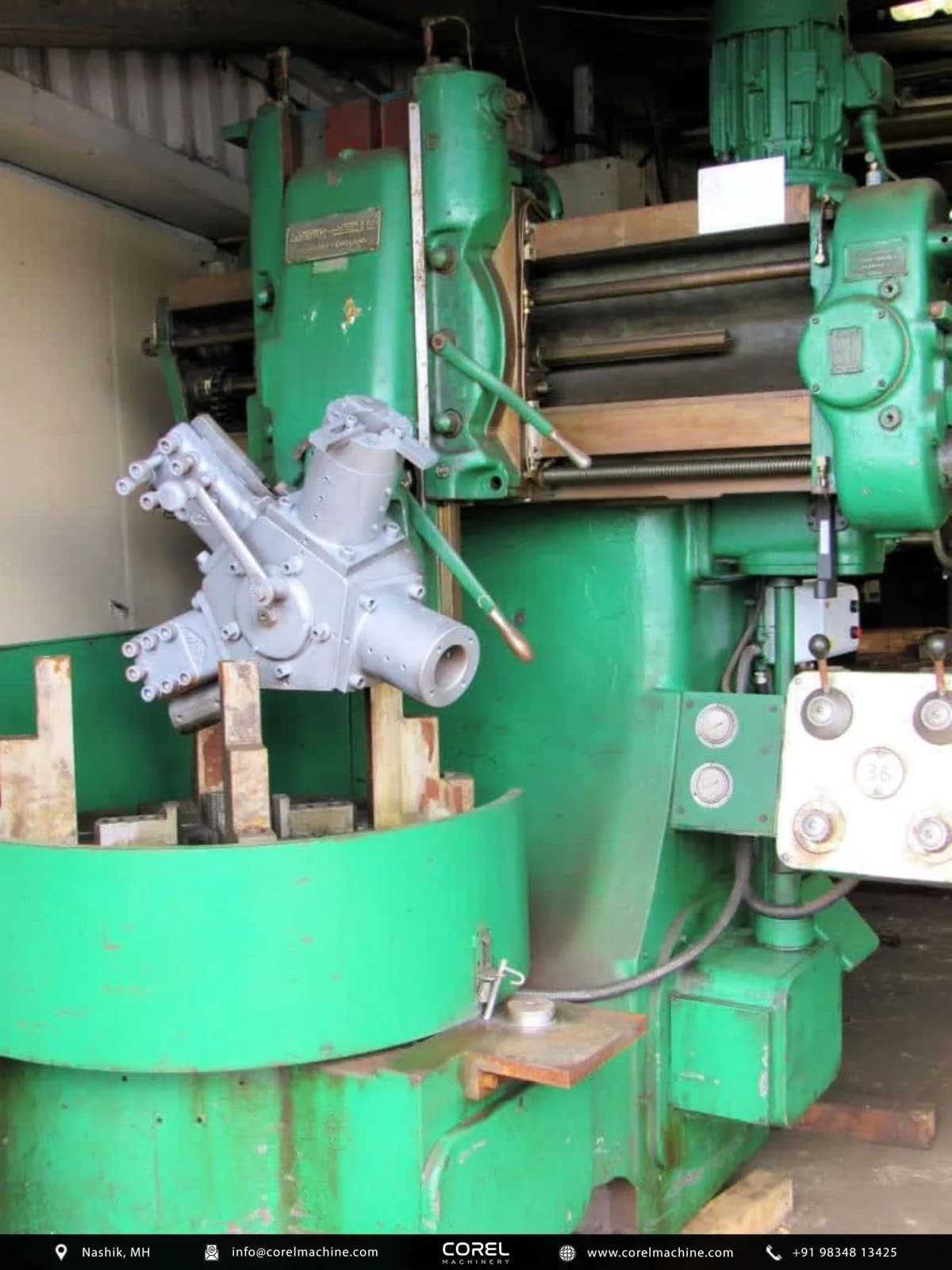
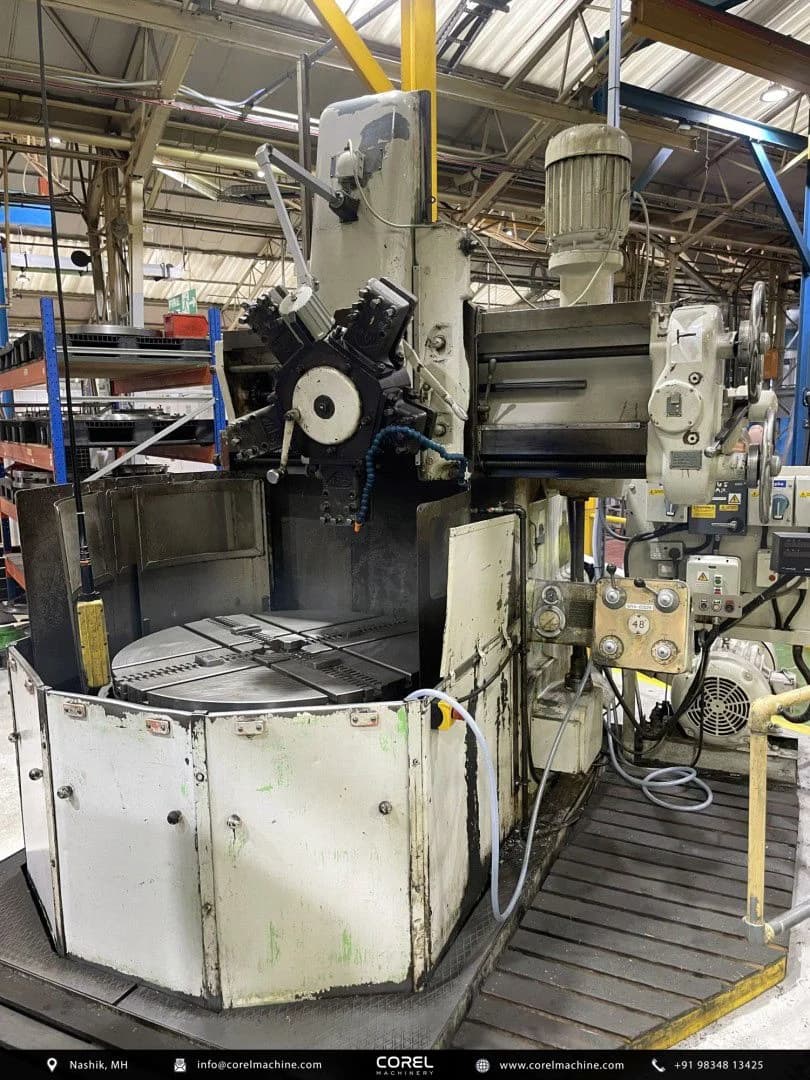
A vertical turning lathe (VTL) holds the workpiece flat on a heavy horizontal rotary table with the turret on a ram above. Gravity seats large, heavy, short-diameter parts — flanges, wheels, gear blanks, valve bodies and rings — that a horizontal chuck can't hold safely. It's a specialist machine bought for big diameters and heavy castings (see our CNC turning center vs VTL comparison).
The specs that decide the fit
- Table diameter and max swing / turning diameter — must clear your largest part.
- Max part height and weight (table load) — heavy castings load the table bearing hard.
- Table drive power/torque — for roughing big forgings.
- Rail/column travel (X/Z of the ram) and turret — reach and rigidity over the part.
- Live tooling / C-axis on mill-turn VTLs — for drilling and milling on the face.
- Control — Fanuc/Siemens common; confirm spares in India.
Price bands in the Indian used market
A note on prices: figures below are broad indicative bands for the Indian used-machine market and move with age, spindle hours, brand, control generation and condition. Treat them as ballpark, not quotes — ask us for a current price against a specific machine.
- Smaller VTL (~1–1.6 m table): typically ₹15–45 lakh.
- Mid-size VTL: typically ₹45 lakh to ₹1.5 crore.
- Large / twin-column / mill-turn VTL: ₹1.5 crore and up.
Diameter and condition drive price more than anything else.
Common wear points to inspect
- Table bearing: the heart of a VTL — check for runout, axial play and noise as it rotates; a worn table bearing is a major cost.
- Table flatness / face runout: affects every part's accuracy.
- Ram & rail wear: vertical ram straightness and rail/way condition under load.
- Spindle/table drive: power delivery and braking under a heavy cut.
- Turret & live tooling (if fitted): indexing and drive health.
Handling and site needs
A VTL needs reliable overhead lifting (EOT crane or jib) to load heavy parts onto the table, and a foundation rated for the concentrated table load. Plan the rigging and floor before purchase.
Total cost of ownership
Budget for heavy rigging and installation, a strong foundation, 415 V power (transformer/stabiliser if imported), and lifting equipment for loading parts, plus tooling. These costs are larger than for a small lathe.
Buyer checklist
- Table diameter and swing clear your part
- Table load rating suits your heaviest casting
- Table bearing runout/noise checked
- Table face flatness/runout acceptable
- Ram straightness and rail wear inspected
- Overhead crane available for loading
- Foundation rated for the load
- Control supported; backups available
Tell us your part's diameter, height and weight and we'll match an inspected VTL in stock and advise on rigging and foundation.
Looking for a machine?
Browse our inspected, imported inventory or ask us for a quotation.
Browse Used CNC Machinesarrow_forward